News
Why Do Stainless Steel Angle Irons Suffer from Corrosion?
Why Do Stainless Steel Angle Irons Suffer from Corrosion?
Although stainless steel angle iron boasts outstanding corrosion resistance, it is still prone to corrosive damage when exposed to harsh corrosive environments for a long time. This typical uniform corrosion occurs comprehensively on the contact surface between the angle iron and the corrosive medium, featuring continuous and uniform thinning of the section, which is most common in acidic and hot alkaline working environments. In the industry, the corrosion rate (mm/a) is the core indicator adopted to evaluate the overall corrosion resistance of stainless steel angle iron.
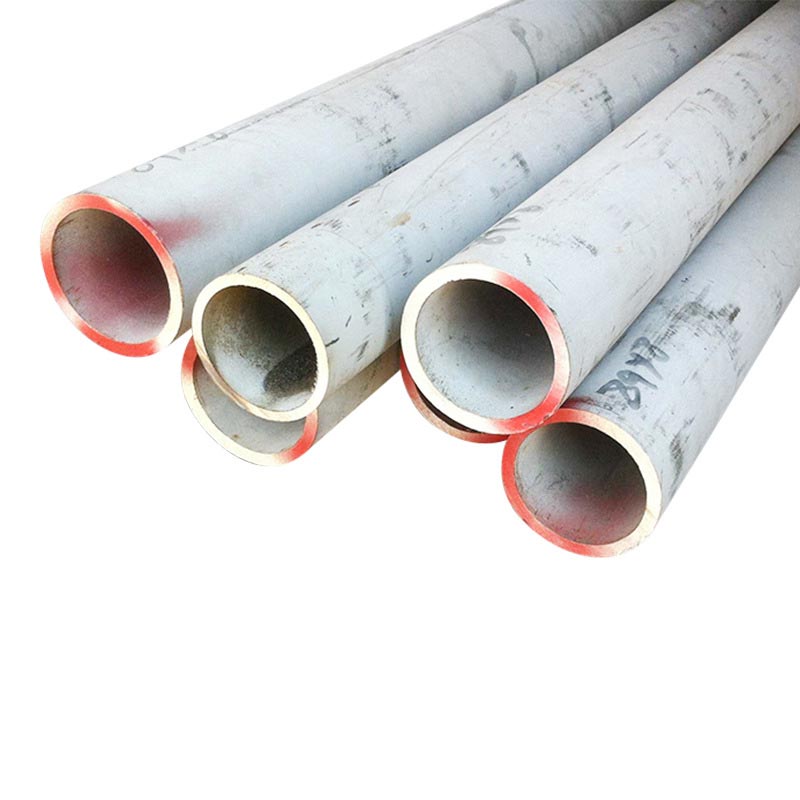
The core cause of corrosion failure lies in the defective passivation film of stainless steel. When the surface passivation film fails to form completely, presents unstable structure, or gets damaged and cannot be repaired in a timely manner, corrosion will occur. In practical engineering applications, even if stainless steel angle iron is in a passivated state in electrolyte environments, it will still dissolve slowly at different rates. Long-term continuous dissolution will gradually thin the section of angle iron equipment, components and containers, eventually leading to structural failure and scrapping.
Targeted prevention measures can effectively avoid uniform corrosion failures. First of all, enterprises shall select stainless steel grades with matching corrosion resistance levels according to the type, concentration, temperature of corrosive media and actual service requirements. The grade selection needs to comprehensively consider service life, component size and thickness, as well as product quality standards such as impurity content and color uniformity. For precision equipment and components that require long-term surface gloss and high dimensional accuracy, or scenarios with strict product purity requirements, grade 1 to 3 corrosion-resistant stainless steel is preferred. For conventional equipment with convenient maintenance and short service cycle, grade 4 to 6 materials are applicable, while grades above 6 are rarely used in conventional scenarios.
It is worth noting that qualified corrosion resistance only means the corrosion rate is within the allowable safe range, rather than zero corrosion. Relying on mature industry corrosion manuals, massive medium test data and rich engineering experience, standardized material selection and scientific application can completely eliminate major uniform corrosion accidents of stainless steel angle iron. Grasping the corrosion rate of selected materials in specific working conditions can accurately predict the service life of stainless steel equipment and realize safe and stable long-term operation.
Related News
- What Causes Rough Surface on Galvanized Angle Steel?
- Analysis on the Development and Advantages of Galvanized Angle Steel
- Features of Galvanized Angle Steel
- Titanium-Plated Angle Steel: Production Processes of Hot-Dip & Electro-Galvanized Angle Steel
- What Are the Differences Between Galvanized Angle Steel and Ordinary Angle Steel?
- What Are the Appearance Standards and Application Advantages of Hot-Dip Galvanized Angle Steel?
Leave me a message